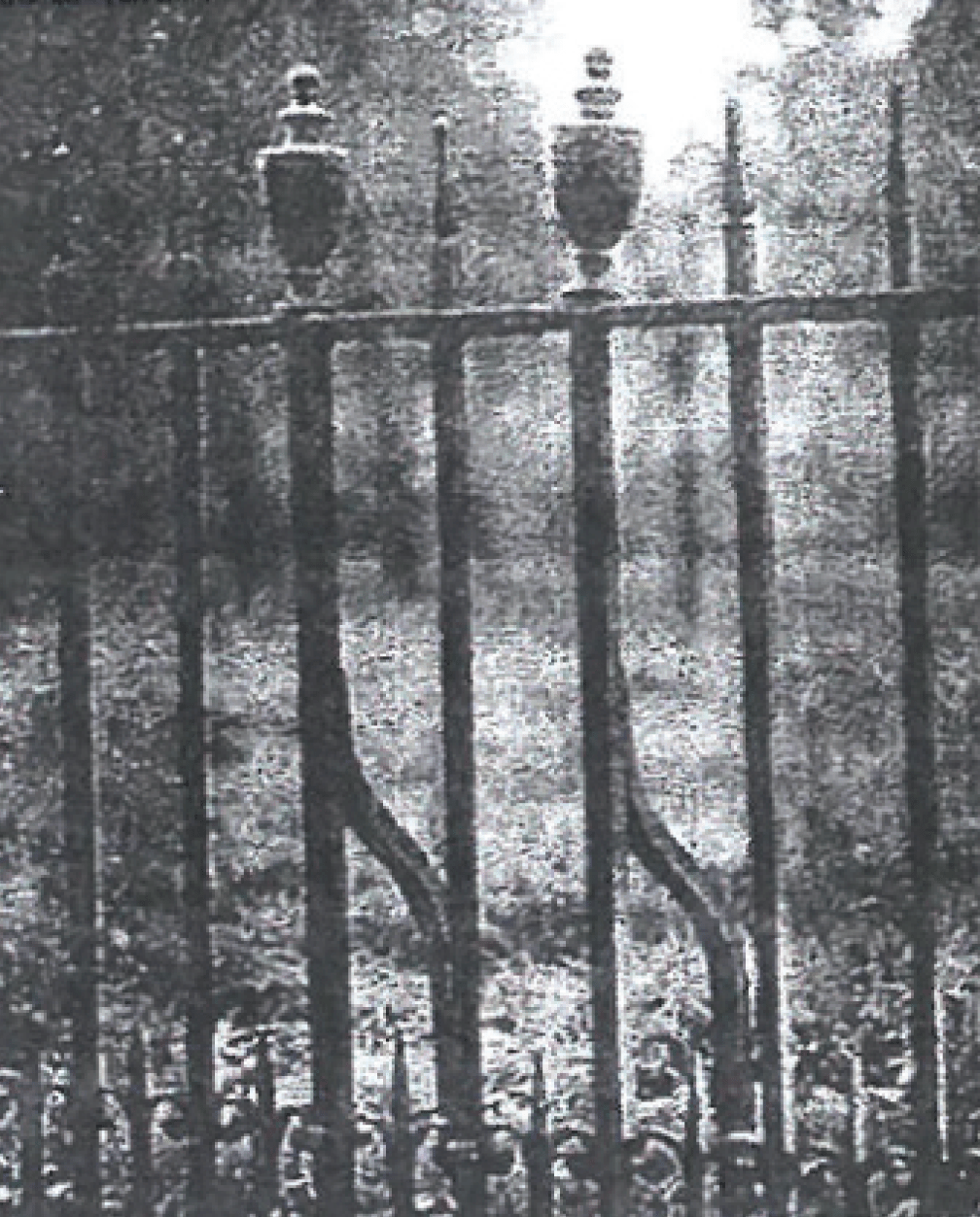
The late 19th century was marked by the enumeration of all kinds of phobias. To the conversation related to architecture and space, the most notable of these phobias were the observations made by the German psychiatrist and neurologist Carl Otto Westphal, French psychiatrist Jean-Martin Charcot, and Austrian psychiatrist and psychoanalyst Sigmund Freud. Each of them was operating from vastly different European cities that were all undergoing rapid urban changes in their own way, but they all observed a succession of patients presenting with symptoms that were broadly described as a difficulty in crossing open spaces or empty streets. This came to be known as Agoraphobia, a term coined by Westphal that was first used in 1871. While Freud related this to an essential abnormality in sexual life[1], it was Westphal who was the first to use the term as an interpretation of a set of symptoms related to space. To a degree he was interested in the spatial context for these symptoms, and he noted that one of his patients would experience rapid heartbeats on entering a public square, finding it almost impossible to cross from one side to the other, as he felt as though the pavement were falling away from under his feet[2]. The Berlin of Westphal, the Paris of Charcot, and the Vienna of Freud, as well as London, had all been undergoing major architectural and urban changes, as well as rapid population growth. These changes transformed all of these cities from small capitals into major metropolises. Looking at the development of Agoraphobia in the 19th Century, this paper suggests that the implementation of iron railings around London’s proliferation of squares could be considered to be a defence against the threat or difficulty imposed by these pockets of open spaces, which formulated the presence of rus in urbe. While there is no documentation linking the two together, it attempts to formulate a view around the containment of urban spaces that is not solely centred around ownership as a motivating factor in its implementation but is read as a protective spatial reaction against changes in the fabric of the city, which were read and experienced by the inhabitants. Westphal noted in his observations that his patients often found relief from the threat of an open space to be when they were closest to a building, object, railings or walls[3]. Despite Freuds insistence upon the origins of this phobia to be found in sexual abnormalities, it is the spatial manifestations of this phobia that make it possible to examine the prospect of it as an urban architectural disease that could be considered to be a direct reaction to how we read the urban spatial construct. Many experienced the open spaces found in the metropolises of 19th Century Europe to be the common sites for these types of agoraphobic reactions, especially where there was a strong

Example of agoraphobia or fear of open spaces. The case of Alexis
Gombaud who could not cross the courtyard of his house alone, Giancarlo Costa, circa 19th Century.
psychoanalytic culture to log them. While it would be several decades before Ernst Jones established the British Psychoanalytical Society in 1913, which firmly established a psychoanalytic culture, London was seemingly not short of its own agoraphobic inhabitants. It is well documented that Ford Madox Ford, the English novelist and poet and resident of London, would experience sudden faintness when he was in the street or in empty spaces[4] and he eventually travelled from London to Germany to be diagnosed.
The first London square was born in 1631, when the Bedford family (Bedford Estates) started to build Covent Garden on pastureland that was previously used for grazing. The family commissioned the architect Inigo Jones to do the design, who had embarked on the rite of passage of the Grand Tour just over fifteen years before in 1613. Like many who took the tour, he garnered great inspiration from the grand piazzas of Italy. The ancient and medieval city of London slowly but surely began its expansion, and the pockets of dispersed villages gradually connected and coalesced.[5] These squares created the idea of rus in urbe, or the bringing the countryside into the city, and was a process of refining through architecture what was once vast swathes of pastureland. This former pastureland was now transformed into a garden enclave that could become a refuge for birds and plants, and for the enjoyment of the inhabitants of the surrounding properties, finding itself nestled within the bustling city. New configurations of urban spaces in London during the 18th and 19th Century included the growing presence of these rus in urbe garden squares, a space that was to provide all of the joys, and perhaps even anxieties, of being outdoors while remaining embedded in the emerging metropolis. Although railings around these open spaces were first introduced in the 1700’s as a preventative response to any unlawful and dangerous acts that would commonly take place within these unconfined squares, they also became a means to control who exactly was allowed to congregate in these newly formed spaces, which meant that certain behaviours could potentially be prevented if access was controlled. The 18th and 19th centuries marked the beginning of the prevalence of the enclosure, turning open greens into enclosed and private spaces that could usually only be accessed by the residents of the surrounding streets. It did not take long for all of London’s squares to eventually be surrounded by wrought iron railings.
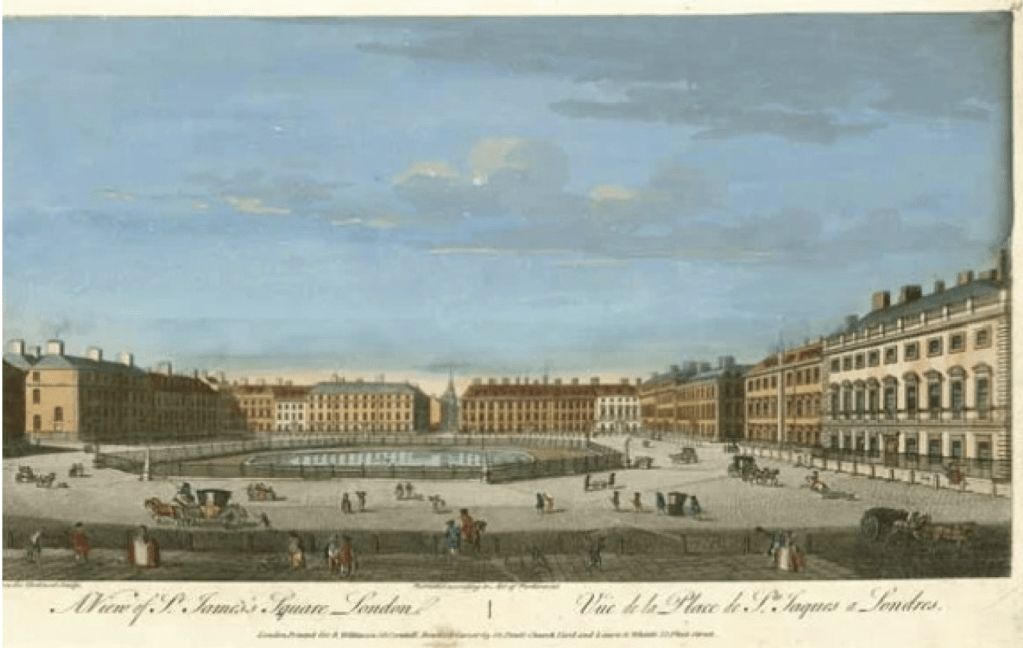
Thomas Bowles, a depiction of St James Square, London, 1700’s.
The Viennese architect and urban planner, Camillo Sitte, analysed the agoraphobic condition in his book ‘City Planning According to Artistic Principles’, and concluded that boundaries provide protection from the exposure of open space as well as not being able to physically differentiate between what was a threat and what was not[6]. So not only did they demarcate a rapidly establishing physical boundary where there previously was none, but they also stood to give a geographical positioning and spatial manifestation to the shifting order of protection and exposure. In Sitte’s work it is possible to find an alignment with the observations of Westphal, who wrote the following in his patient notes of a twenty six year old engineer, anonymised as Mr P:
‘During an attempt to cross an open space the fear begins as soon as the houses of a street leading to an open area increase their distance from him…A feeling of insecurity appears, as if he were no longer walking secure, and he perceives the cobble stones melting together…The condition improves by merely approaching houses again’[7]
It appeared that the more an agoraphobic would diverge from the boundaries, the more diminished the feeling of safety became. There is equal attention given to the relationship with and general description of spaces (open space, house, street) and the emotional reaction of the patient (fear, insecurity, melting). Georg Simmel saw agoraphobia in similar terms, as he recognised that it resulted from the rapid oscillation between the over-close identification with things and the too great a distance from them, both of which he saw as being characteristic of urban life[8]. We see an image emerging that is related to the distance that a subject has to the flank, or anchor point, and the level of fear experienced.
In this capacity, the railings and their implementation could be read to be acting as a spatial defence, protecting passersby by providing a visual marker for spatial demarcation, as well as easing the relationship between the expanse of the garden and the outer context. Inherent to the observations of Westphal, Sitte, and Simmel was the understanding that closeness and distance from a flank played a role. It is clear this is not simply the obvious idea of defending a territory and demarcating ownership of an area of land that was surrounded by railings, but it is much more than this in its relational function as it connects to the experience of the subject in space. While we know that railings were introduced around London’s squares in the 18th Century, it was mostly to stop unwanted night time behaviour and fly-tipping[9]. They could be viewed to have helped curb the agoraphobia that was brought about by the wide-open spaces of the newly expanding urban context, as they quite literally eased the vast expanse of a square without obstructing the view to a beautiful garden. In a more literal way, they provided those using the gardens and squares, and those walking passed them, with a closer object upon which to anchor themselves, whilst persistently maintaining and not completely erasing visual connection.
Although the appearance of many wrought iron railings around London’s squares resembled spears and arrows, which served as a visual and physical deterrent for people who may try to pass over them, ornament was also a common feature in their design. The benign ornamental aesthetic of the iron would masquerade itself with polite patterns to look at, as it acted to place a boundary that did not fully disrupt the visual field.
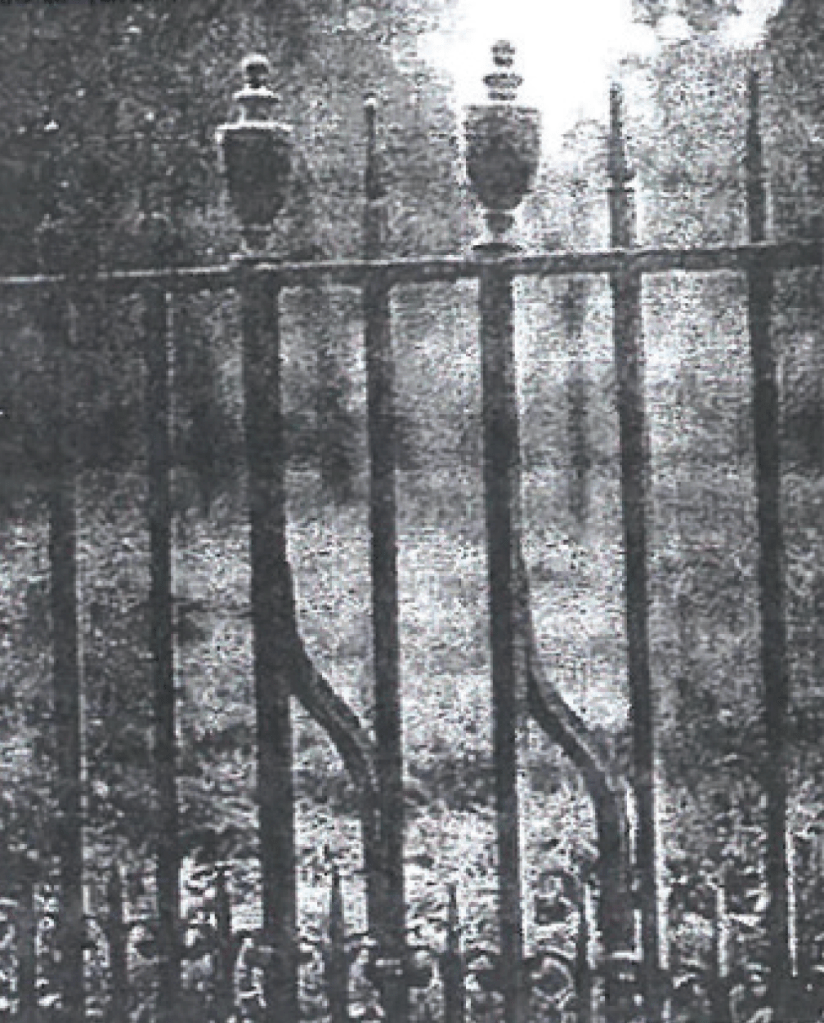
Original ornate railings around St James Square designed by John Nash, 1817, remade by Metalcraft Architectural Metalwork, Tottenham
A reading of this relationship shows us that the purpose of the implementation of railings is not solely to shut one out entirely, because if it was it would have been a wall, but a reading of it enabled by the presence of Agoraphobia is rather that it creates buffers between the expansive visual field of the garden square within the urban context and the physical relationships, as well as implementing a degree of influence over who can access the squares and when to dispel unwanted behaviours by regulating access.
Once the war came, many of the wrought iron railings were cut in order to provide metal for weaponry, an effort to assist in the war that failed as they were unable to be used. Their removal was not just an act of war time pragmatism, as they left behind what have been fondly called phantom railings, which were the stubs of wrought iron left in the coping stones after they had been cut. The fact of their removal, and the presence of their ghosts, came to hold a symbolic meaning for a society that may have wanted its spaces to begin to represent a more egalitarian shift, however, without strong regard for the heritage of the original railings many of the railings that were cut down were reinstated.
A debate held at the House of Lords in 1971 asked Her Majesty’s Government how they could “encourage the owners of London Squares to follow the example of the Grosvenor Estate in replacing the netting around the gardens of Eaton Square with proper railings.” [10]
There was the sentiment that the presence of railings beautified the city landscape. John Nash’s railings had been requisitioned as part of the war effort in the 40’s, replaced with a chain link fence, which remained until the 70’s when they were replaced with steel railings. The railings were intended to be temporary, but St James’s Square Trust held the belief that the design does not improve the heritage of the area. Interestingly, they recognised in their proposal to reinstate the original railings that there is a need to improve the security of the square. So their proposal, supported by English Heritage, the Georgian Group, and the St. James’s Conservation Trust, sought to match the original design by Nash and reinstate the Portland stone coping stones, but this time they wanted to make the railings taller.[11] Indicative of a security function akin the reasoning of their original implementation. Although the appearance of many wrought iron railings around London’s squares resembled spears and arrows, which served as a visual and physical deterrent for people who may try to pass over them, ornament was a common feature in the design of them.
The benign ornamental aesthetic of the iron would masquerade itself with polite patterns to look at, as it acted to place a boundary that did not fully disrupt the visual field but still enabled one to appreciate the beauty of the garden. A reading of this relationship shows us that the purpose of the implementation of railings was never to solely shut one out entirely, because if it was it would have been a wall, but rather that it connects the implementation of the railings to the emotional and psychological experiences of the subject within the city, a type of thinking made possible by the recognition of Agoraphobia.
[1] P. Carter, Repressed Space, The Poetics of Agoraphobia (London: Reaktion Books, 2002), p. 7.
[2] C. Westphal, ‘Die Agoraphobie’, in Westphal’s ‘Die Agoraphobie’, ed. and trans. by T. Knapp and M. Schumacher, University Press of America, Lanham, 1988.
[3] M. G. Craske and D. H. Barlow, ‘Panic Disorder and Agoraphobia’, in D. H. Barlow (ed.), Clinical Handbook of Psychological Disorders, 5th edn, Guilford Press, New York, 2014, p.1
[4] Mathew Beaumont. ‘Autobiography, Urban Space, Agoraphobia’. Journal of Literature and Science 3, 37-49 (2010). p. 42.
[5] F. Wade., ‘The Fraught History of London’s Garden Squares’, House & Garden [Online], 2021. Available at: https://www.houseandgarden.co.uk/article/london-garden-squares [Accessed: 28 October 2021].
[6] C. Sitte., City Planning According to Artistic Principles, trans. by G. R. Collins and C. C. Collins, Random House, New York, 1965.
[7] C. Westphal., ‘Die Agoraphobie’, in Westphal’s ‘Die Agoraphobie’, ed. and trans. by T. Knapp and M. Schumacher, University Press of America, Lanham, 1988, p. 70.
[8] Georg Simmel, “The Metropolis and Mental Life,” in The Sociology of Georg Simmel, ed. and trans. Kurt H. Wolff (New York: Free Press, 1950), 409-424.
[9] T. Longstaffe-Gowan, The London Square: Gardens in the Midst of Town, Yale University Press, 2012.
[10] United Kingdom, House of Lords. (1971) London Squares: Provision Of Railings. Hansard, vol. 317, cols. 137-140, 7 April
[11] St James’s Square Trust, [Online[ Available at: https://www.stjamessquaretrust.co.uk/railings-project [Accessed: 28 October 2021].
 DENA ZIARI